The Essential Guide to Pallet Management: Best Practices and Common Mistakes

Pallet Management Best Practices

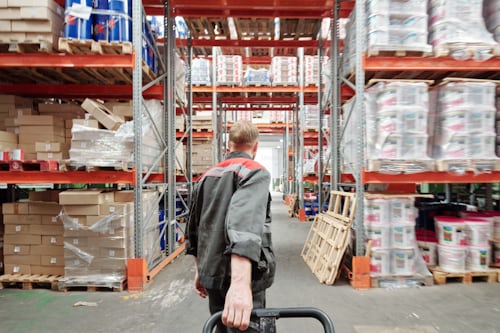
Pallet management is a crucial but often overlooked aspect of logistics and supply chain operations. Pallets are essential components of nearly every warehouse, helping businesses streamline their supply chains, manage inventory effectively, and securely transport goods from one location to another. Effective pallet management can increase efficiency, enhance safety, and improve overall productivity in your business’s operations.

In this guide, we’ll explore the best practices for pallet management, the importance of implementing a pallet protection program, common pallet mishandling mistakes to avoid, and how to ensure your pallet management system runs smoothly.

Four Best Practices for Pallet Management

1. Understand Your Pallet Needs

The first step in effective pallet management is to assess your organisation’s specific pallet requirements. Consider the number of pallets needed, the size and weight of the goods to be stored or transported, and the type of products being handled. Choosing the right pallets for your needs simplifies logistics, reduces inventory complexity, and makes stacking, loading, and unloading more efficient.

2. Leverage Digital Software

Pallet management software is an invaluable tool for tracking inventory, managing pallet conditions, and maintaining accountability. By using software to monitor the type, quantity, location, and condition of pallets, businesses can prevent shortages, reduce overhead costs, and optimize logistics processes. This technology helps streamline pallet tracking, making it easier to maintain a smooth and organised operation.

3. Regularly Inspect and Maintain Pallets

Routine inspections are essential for identifying and removing damaged pallets from circulation. Pallet audit services can help with frequent inspections, repairs, and maintenance, ensuring that pallets last longer and remain safe to use. By catching damage early, businesses can save on replacement costs, protect goods in transit, and comply with industry regulations. Regular maintenance also ensures pallets remain in optimal condition for safe handling and transportation.

4. Train Your Employees

Proper training is vital for effective pallet management. Every employee who handles pallets should understand the company’s pallet management practices. Ensure your team is well-versed in pallet inspection, maintenance procedures, and inventory management. A well-trained workforce will reduce errors, minimize damage, and improve operational efficiency and safety.

Why Should You Implement a Pallet Protection Program?

Implementing a pallet protection program may seem like an additional expense, but it provides numerous long-term benefits that can improve the overall efficiency of your operations.

Here’s why you should consider implementing a pallet protection program:

Improved Safety: A structured program ensures that employees are trained in proper pallet handling, reducing the risk of accidents and injuries.

Better Equipment Handling: Proper pallet care prevents damage to equipment, reducing the likelihood of breakdowns and costly repairs.

Reduced Costs: By protecting pallets and preventing damage, businesses save money on repairs, replacements, and work-related injuries.

Lower Maintenance: Well-maintained pallets require less frequent repair, saving both time and money in the long run.

Operational Efficiency: Protecting pallets ensures a smoother workflow, minimizing downtime caused by damaged pallets or equipment.

Decreased Contamination: Regular cleaning and servicing of pallets reduce the risk of product contamination, preserving the quality of goods during transit.

A pallet protection program fosters greater awareness and improves pallet handling throughout your organization, resulting in fewer mishandling incidents and better overall pallet care.

Common Pallet Mishandling Mistakes

Even with the best practices in place, mishandling can still occur. Avoid these common mistakes to ensure your pallets and goods are managed efficiently:

Avoid Sliding Pallets with Equipment: Don’t push pallets across floors with forklifts or trucks. Sliding can cause stress on the pallet structure, leading to failures and floor damage.

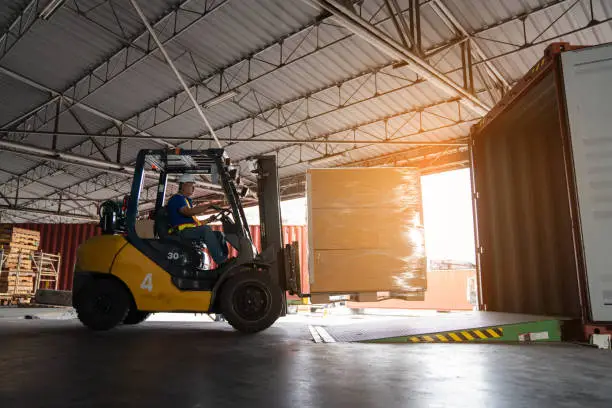
Prevent Short Forking: Ensure lift truck tines are fully inserted into pallet openings. Partial insertion can lead to uneven weight distribution, causing undue stress on the pallet.

Spread Forks Properly: Forks that are too wide or narrow won’t distribute weight correctly, increasing the risk of a pallet collapse.

Don’t Approach Pallets Too Quickly: Speeding toward pallets can cause misalignment, resulting in damage to the pallet or the goods it holds.

Load Pallets Properly: Always distribute weight evenly across the pallet. Uneven loading can cause structural failure and damage during transportation.

Secure the Load: Ensure that all goods are properly secured to the pallet using stretch wrapping, banding, or strapping. This keeps everything in place and prevents movement during transit.

By training your employees to avoid these common errors and by investing in professional pallet management services, you can reduce the risks of mishandling and improve overall operational efficiency.

Conclusion

Pallets play a vital role in the logistics industry, and implementing best practices in pallet management ensures a safer, more efficient, and cost-effective operation. Start by understanding your pallet needs, leveraging digital tools for tracking, conducting regular inspections, and training your team. With these strategies in place, your business can optimize its pallet management and boost supply chain productivity.
The Unsung Heroes of Logistics: Pallets and Their Crucial Role in Supply Chain Management

Pallet Loscam Australia

Pallets are the backbone of logistics and supply chain management, silently carrying the weight of industries worldwide. Whether in bustling cities like Sydney or quieter regions like Tasmania, pallets keep goods moving efficiently. Yet, the world of pallets is more intricate than it first appears. From ensuring a steady supply to reducing losses and improving tracking systems, businesses need a firm grasp on pallet control. In this article, we will dive into the importance of pallet plastic, pallet tracking, and effective pallet control across various regions in Australia, including New South Wales (NSW), Tasmania, Perth, and Brisbane.

The Rise of Pallet Plastic: A Game Changer

Traditionally, pallets have been made from wood. But over the last few decades, pallet plastic has become a popular alternative, and for good reason. Plastic pallets are not only more durable but also provide a cleaner, lighter, and more consistent solution for businesses.

From my personal experience managing logistics in a local retail business, we made the switch to plastic pallets a few years ago, and it’s been a game-changer. Plastic pallets don’t splinter, are weather-resistant, and can be easily sanitized, making them perfect for industries like pharmaceuticals and food where hygiene is critical.

Key benefits of pallet plastic include:

Longevity: They have a much longer lifespan compared to wooden pallets, which can break or deteriorate over time.

Reduced weight: Easier handling for workers and reduced shipping costs.

Environmental benefits: Often made from recycled materials and can be recycled again at the end of their life.

For companies operating in extreme weather conditions, like those in Brisbane’s tropical climate or Tasmania’s unpredictable winters, plastic pallets provide an extra layer of reliability and ease of use.

The Importance of Pallet Tracking

Keeping track of pallets may not sound like the most exciting part of logistics, but it’s one of the most crucial aspects. Imagine trying to run a warehouse or a busy shipping operation without knowing where your pallets are—it would be a nightmare! Pallet tracking helps companies stay organized and avoid unnecessary losses.

One of the challenges I faced when managing a logistics project was the frequent misplacement of pallets. We would often waste hours searching for misplaced pallets, leading to delays and unnecessary costs. Introducing a pallet tracking system was like a breath of fresh air—it completely changed how we operated.

With pallet tracking, companies can:

Monitor the location of each pallet: Whether in a warehouse or during transit.

Track the movement history: Understanding the journey each pallet takes can help improve efficiency.

Identify loss or theft: Reducing the number of ‘missing’ pallets can save significant money.

Optimize usage: Knowing which pallets are in use and which are sitting idle allows for better resource management.

Modern pallet tracking technologies use RFID chips, barcodes, or GPS, ensuring real-time updates on the status and location of pallets. In regions like NSW and Perth, where industries operate at a large scale, pallet tracking is no longer optional but a necessity.

Pallet Control in New South Wales (NSW)

When it comes to pallet control in NSW, the state’s vast economy demands precise and efficient pallet management. Whether it’s manufacturing, retail, or agriculture, NSW businesses rely heavily on robust pallet systems to ensure their goods move smoothly across the region.

My cousin, who works for a mid-sized logistics firm in Sydney, often shares stories about the challenges they face when managing thousands of pallets for their clients. Without proper pallet control, they could easily lose track of inventory, incur high costs, or delay shipments. Their secret? They’ve implemented a sophisticated pallet tracking system that integrates with their inventory management software, making pallet control a seamless process.

In NSW, pallet control helps companies:

Reduce losses from misplaced or damaged pallets.

Improve turnaround time for orders.

Streamline operations by ensuring pallets are always in the right place at the right time.

Pallet Control in Tasmania

Tasmania, with its more rural setting and smaller population, faces unique challenges when it comes to logistics. However, just because it’s a smaller state doesn’t mean pallet control in Tasmania is any less important. In fact, due to the state’s geographic isolation, efficient pallet management is critical.

From the booming salmon farming industry to the fresh produce sector, businesses in Tasmania rely on reliable pallet control to get their products to mainland Australia and beyond. In my own travels to Tasmania, I’ve seen how essential pallets are to the island’s agricultural sector, ensuring products like apples, berries, and dairy reach supermarkets across the country.

Effective pallet control in Tasmania helps businesses:

Minimize transportation costs by optimizing pallet loads.

Ensure product safety, especially for fragile or perishable goods.

Track pallets across regions for better logistics planning.

Pallet Control in Perth

Over on the west coast, pallet control in Perth takes on a different flavor. As one of Australia’s most isolated major cities, Perth faces the dual challenge of long-distance shipping and regional supply chain management.

Several years ago, I worked on a project in Perth that involved transporting mining equipment to remote sites. Having an efficient pallet control system was essential. Without it, we would have faced significant delays, not to mention the added cost of replacing lost or damaged pallets.

For businesses in Perth, the benefits of pallet control include:

Efficient management of large-scale operations, especially in industries like mining and agriculture.

Reduced downtime by ensuring pallets are readily available for loading and shipping.

Cost savings by avoiding the need for constant pallet replacements.

Pallet Control in Brisbane

Lastly, let’s turn to Brisbane, a city known for its dynamic economy and growing infrastructure. As Brisbane’s industries expand, so does the need for better pallet management.

When I visited a friend’s warehouse in Brisbane, I was surprised by the size and scale of their operation. They dealt with everything from consumer goods to heavy machinery, all of which relied heavily on pallet systems. Implementing an advanced pallet control system allowed them to manage their stock more efficiently, improve tracking, and reduce losses due to damaged pallets.

For Brisbane’s businesses, pallet control ensures:

Improved scalability, allowing them to handle both small and large shipments.

Enhanced stock control, reducing errors in shipping and receiving.

More reliable shipping times, which is crucial for customer satisfaction.

Conclusion

Pallets might seem like simple tools, but they play a crucial role in keeping the wheels of commerce turning. From the flexibility and durability of pallet plastic to the necessity of precise pallet tracking systems, businesses in NSW, Tasmania, Perth, and Brisbane need to invest in effective pallet control.

In the fast-paced world of logistics, staying on top of your pallet game can mean the difference between smooth operations and costly disruptions. So, whether you’re in a warehouse in Sydney or shipping goods from Tasmania, take a moment to appreciate the humble pallet—your business depends on it!

Understanding the Pallet Control System: Enhancing Efficiency and Safety in Logistics

Understanding Pallets

Pallets are the backbone of logistics, supporting goods during transportation across various industries. A pallet management control system combines processes, technologies, and methodologies to increase efficiency and enhance safety. This blog explores the fundamentals of pallet management systems and how accurately managing pallets can boost operational efficiency.

What Are Pallets and Pallet Management Systems?

Pallets are flat transport structures used in the transportation of goods across industries such as manufacturing, retail, logistics, agriculture, and construction. They come in various sizes, shapes, and materials. As valuable assets, pallets need to be tracked and managed efficiently. This need has led to the development of pallet management systems.

Pallet management systems oversee the lifecycle of pallets within a supply chain, including tracking their location, usage, and maintenance. These systems help minimise loss, reduce costs, and streamline inventory management. Pallet management services, provided by system providers, include the maintenance and operation of pallet inventories, optimising the supply chain for cost-effective and uninterrupted operations.

Key Components of Pallet Management Control

Effective pallet management controls are essential for increasing supply chain efficiency and gaining greater visibility over asset management. The key components include:

Tracking Technology: This can range from physical pallet dockets, barcodes and RFID tags to advanced GPS systems, helping monitor and manage pallet movement and storage in real-time.

Inventory Management Software: Integrates with tracking technology to provide insights into pallet usage and inventory levels, aiding in forecasting needs and making informed decisions.

Pallet Pooling Services: Based on the principles of the circular economy, this concept involves sharing or reusing pallets instead of owning them. Third-party logistics providers manage a pool of pallets, leasing them to businesses within a network.

Maintenance Protocols: Regular inspection, cleaning, and maintenance ensure pallets remain efficient and in good condition.

User Training: Training employees on the use of pallet control systems can significantly reduce errors and losses, enhancing overall supply chain efficiency.

Benefits of Pallet Management Systems for Supply Chain Efficiency

Pallet management systems offer several benefits for achieving higher levels of supply chain efficiency:

Better Resource Allocation: Improved availability of pallets and reduced downtime in their usage lifecycle. Insights from pallet control services help allocate resources more efficiently and support advanced decision-making.

Improved Inventory Control: Technologies like barcodes and RFID enable real-time tracking of pallet movement, providing valuable data for better forecasting and inventory planning. Accurate tracking ensures optimal inventory levels, reducing stockouts or overstock situations.

Cost Reduction: Reliable tracking systems reduce the number of lost or stolen pallets, lowering replacement costs. Effective pallet management minimizes the need for additional purchases and optimizes storage space, reducing warehouse rental costs.

Conclusion

Effective pallet management is crucial for better supply chain operations. Beyond tracking pallets, these systems offer benefits in resource allocation, inventory control, and cost reduction. Investing in a robust pallet management control system can significantly enhance operational efficiency and protect your business’s bottom line.

Implementing Pallet Control Solutions for Maximum Efficiency

Pallet Control

Pallet control solutions are essential for ensuring efficient and safe operations across various industries, including manufacturing, retail, logistics, transportation, and warehousing. Companies like Precise Pallet Management provide these solutions, handling tasks such as tracking and resolving disputes relating to pallets. In this blog, we’ll explore the right way to implement pallet control solutions for maximum efficiency.

What Are Pallet Control Solutions?

Pallet control solutions encompass a range of technologies, strategies, and processes designed to manage pallets within the supply chain. Common solutions include pallet tracking systems, pallet pooling, damaged pallet repair and maintenance, and pallet design and optimisation. These solutions are provided by pallet pooling companies, material handling equipment suppliers, software providers, third-party logistics, and in-house logistics teams.

Hiring companies like Precise Pallet Management can simplify complex pallet control tasks, offering services such as lost pallet recovery, pallet audits, operational audits and ongoing pallet management.

How Can Effective Pallet Control Solutions Streamline Operations?

Implementing pallet control solutions can streamline operations in several ways:

Improved Inventory Management: Accurate pallet tracking and management help businesses understand stock levels, reducing wastage, stockouts, or overstocking.

Cost Reduction: Efficient pallet control can save money on transportation, storage, and pallet replacement costs.

Reduced Downtime: Minimising downtime caused by pallet shortages or damage ensures smooth operation of production lines and distribution centers.

Enhanced Productivity: Streamlined pallet processes reduce the time employees spend locating and handling pallets, allowing them to focus on other tasks.

Sustainability: Promoting the recycling and reuse of pallets contributes to a greener supply chain.

Improved Safety: Efficient pallet management creates a safer working environment by reducing the risks of accidents caused by mishandled pallets.

Steps to Implement Pallet Control Solutions

Assess Current Pallet Systems: Understand and evaluate your current pallet systems, including tracking, storage, and handling processes. Engage with employees to identify management and operational challenges.

Understand Your Pallet Needs: Assess the specific pallet needs based on the size, weight, and type of goods you transport or store. Choose pallets that can withstand operational rigors while optimising space.

Define Goals and Metrics: Set clear objectives for your pallet control management system, such as reducing pallet loss rates and increasing fulfillment accuracy. Establish key performance indicators (KPIs) to measure progress.

Choose the Right Technology: Invest in technologies like Warehouse Management Systems (WMS), barcode and RFID technology, and specialised pallet management software to automate and optimise pallet tracking and inventory management.

Use Advanced Techniques to Maximize Space: Implement strategic stacking and efficient palletising techniques to maximize space and prevent waste.

How to Choose the Right Pallet Control Solution Provider

Cost: Compare the costs and services of different providers to ensure they meet your business demands.

Scalability: Ensure the provider can accommodate your business’s growth and changing needs.

Reliability: Choose a provider with a track record of reliability and customer satisfaction.

Integration: Consider how well the provider’s solutions integrate with your existing systems and processes.

Sustainability: If sustainability is important to your business, choose a provider that offers environmentally friendly pallet management solutions.

Conclusion

Effective pallet management is crucial for the smooth operation of warehouses and supply chains. Professional services like Precise Pallet Management can significantly enhance pallet management in your organisation. By following the steps outlined in this blog, you can streamline operations and achieve maximum efficiency.

Switching to Plastic Pallets: A Guide to Enhancing Your Supply Chain

Switching to Plastic Pallets

Pallets are crucial in the supply chain for their efficiency and better space usage. The choice of pallets can significantly impact supply chain operations. Among many types of pallets, plastic pallets are gaining popularity over wood pallets due to their durability, longevity, and hygiene aspects. If you’ve been using wooden pallets and are considering switching to plastic ones, this guide will help you understand the benefits and the right time to make the switch.

What Are Plastic Pallets?

Plastic pallets are designed to replace traditional wooden ones and come in various types, including nestable, rackable, HDPE, recyclable, and those made from recycled materials. They are widely used in warehouses, factories, stores, and shipping companies due to their lightweight, hygienic, and cost-effective nature.

Are Plastic Pallets Better Than Wood Pallets?

Plastic pallets offer several advantages over wooden ones:

Resistance to Microbial Growth and Pest Infestation: Ideal for food, beverage, and pharmaceutical products due to their non-porous structure and moisture resistance.

Resistant to Contamination, Odor, and Corrosion: Unaffected by spills and easy to clean, making them suitable for handling various substances.

Durability: More resistant to damage from handling and pests, with a longer lifespan compared to wooden pallets.

Sustainability: Can be recycled at the end of their life, reducing carbon footprint and waste.

Lightweight: Easier to handle and move, reducing transportation costs and wear on shipping vehicles.

Can Plastic Pallets Handle My Supply Chain?

Yes, plastic pallets can efficiently handle your supply chain needs. They come in various types to cater to different requirements, such as injection-molded, blow-molded, structural foam, and nesting and stacking pallets. Plastic pallets are stable, robust, and less prone to damage, making them suitable for various load types.

How Much Do Plastic Pallets Cost?

The cost of plastic pallets depends on several factors, including the type of pallet, its use in the supply chain, and whether it is pooled, purchased, or rented. Additional factors include delivery, collection, washing, and repairs. Expert pallet pooling companies like Precise Pallets can provide cost-effective solutions that enhance supply chain efficiency.

When Is the Right Time to Switch to Plastic Pallets?

There is no perfect time to switch to plastic pallets; it depends on when wooden pallets no longer meet your needs. Plastic pallets offer consistent sizes and weights, making them compatible with existing automated material handling systems. The transition is seamless, and companies like Precise Pallets can ensure smooth operations with their dedicated services.

Conclusion

Pallet management is key to successful supply chain operations. Plastic pallets offer several advantages over wooden ones, making them a valuable investment. Switching to plastic pallets at the right time can enhance your supply chain efficiency. Precise Pallets is a reliable provider of high-quality plastic pallets and pallet management services.

Maximizing Efficiency with Effective Pallet Management

Pallet Management

Pallets are essential for cargo protection, bulk shipment, and damage reduction. They also promote stock organisation, making them a crucial feature of modern supply chain systems. Through pallet management services, businesses can streamline operations and improve communication systems. This blog explores key factors for effective pallet management.

Establishment of a Detailed Pallet Policy

Formulating a viable pallet policy and communicating it to customers and suppliers is crucial. All parties must understand the terms and conditions to minimize misconceptions and disputes. Align your policy with industry standards to safeguard accountability and integrity, avoiding legislative arguments that may disrupt operations.

Use of Web-Based Software

Utilise web-based software systems to reduce human input and minimise errors. These systems enhance the effectiveness of your operations by generating up-to-date reports and trading partner details which ultimately improve your return on investment.

Understanding Your Supplier’s Invoice

Understanding your supplier’s invoice is essential for accurate payments and identifying irregularities. Recognise different aspects of the invoice, such as the on-hire balance and invoice cost, to detect inconsistent patterns and overpriced equipment.

Creation of Monthly KPI Reports

Monitoring pallet account trends is crucial. Understand issues like account variance, flowthrough ratio (FTR), and exception rates. These factors are relevant to cost control initiatives and indicate the need for staff training and process improvement.

Selecting Your Pallet Controller Carefully

A competent pallet controller is vital for reducing costs and ensuring profitability. They should understand the commercial impact of pallets in the supply chain and possess excellent communication skills. Whether in-house or outsourced, a skilled pallet controller is a major step towards a smooth supply chain and efficient operations.

Pallet Pooling

Pallet pooling, a circular economy concept, involves companies sharing pallets. This strategy reduces procurement, management, and recovery complications, lowering the Total Cost of Business (TCOB) by eliminating the responsibilities of managing a company’s pallet supply.

Auditing Your Processes

Auditing helps identify potential pallet losses and errors. It reveals weaknesses in staff performance and business processes, allowing for corrective measures such as staff training, process improvement, and compliance reporting.

Weekly Reconciliation of Your Invoices

Reconcile your pallet account weekly to safeguard transaction accuracy. Verify expected transfers and investigate unexpected ones. Weekly reconciliation is more manageable and effective than monthly, ensuring efficient operating systems.

Addressing Issues from Their Root System

Set deadlines for weekly and monthly workflows to recover lost pallets promptly. Addressing issues when pallet movements are fresh in mind and documentation is available simplifies the recovery process and reduces future risks.

Summary

Proactive management practices in pallet control are crucial for maximising effectiveness and minimizing expenses. Key practices include:

    1. Clearly Defined Policies

    2. Automation Technology

    3. Understanding Supplier Invoices

    4. Monitoring KPIs

    5. Selection of Competent Controllers

    6. Sustainability Considerations

    7. Routine Audits

    8. Timely Invoice Reconciliation

    For the best pallet solutions in Australia, contact Precise Pallet Management today. PPM provides expert services to maximize pallet recoveries and minimize losses, saving time, effort, and resources.

    Enhancing Supply Chain Efficiency with Pallet Management Systems

    Pallet Management Systems

    For the supply chain, which consists of pallets, crates, and containers, to function smoothly, optimal supply and efficient pallet management systems are essential. For large volumes of returnable transport packaging (RTP), a comprehensive system is crucial for tracking and monitoring the entire supply chain from a single platform. Pallet management systems, such as those for Loscam or CHEP pallets, can result in faster transit times, better resource utilisation, improved life-cycle management, and overall cost savings. This blog discusses the importance of a pallet management system, highlighting potential causes of overstocking in returnable pallets, the cost of stocking reusable containers and pallets, and its potential to enhance supply chain efficiency.

    What Exactly Is a Pallet Management System?

    Pallet management systems, or pallet software applications, help optimise supply chain efficiency. These systems digitise various aspects of the supply chain, such as tracking and monitoring RTP transportation, automating pallet counting, and monitoring the speed at which RTP moves throughout the supply chain. This optimisation not only reduces costs but also creates a more efficient and continuous supply chain.

    What Are the Possible Causes of Overstocking in Returnable Pallets?

    Several factors contribute to overstocking in returnable pallets, including:

    Offsetting Warehouse Inventory: Inventory in use is effectively removed from circulation and must be offset, requiring regular rotation to avoid high holding fees.

    Dealing with Split Loads: Dividing a single shipment into smaller loads for different destinations increases the need for more supply chain assets.

    Buffer Stocks: Maintaining a buffer of RTP containers is critical to compensate for any shortcomings and ensure smooth operations.

    Absence of Automation: Manual handling of supply chains leads to inefficiencies and inaccuracies, creating pressure to hold inventory.

    Urgent Need to Match Production Schedules: Lack of pallets or crates can disrupt production lines, especially in industries like automotive manufacturing.

    Changes on the Demand Side: Inconsistent throughputs in industries like automotive spares and textiles can lead to RTP being held up or taken out of circulation.

    Reverse Logistics Delays: Poorly managed supply chains can result in time-consuming pallet recovery processes.

    Misplaced or Lost Inventory: RTP is often lost, misplaced, or damaged, encouraging suppliers to overstock due to lack of visibility.

    What Costs Are Involved in Stockpiling Reusable Containers and Pallets?

    Stockpiling reusable containers and pallets incurs several costs, including:

    Paying for Standby: Added stock as a buffer requires accounting for incoming and outgoing shipment charges.

    Increased Warehousing and Storage Costs: Additional funds are needed for extra pallets and containers introduced into the supply chain.

    Increased Rental Fees: Extra stock requires additional space, leading to higher rental fees.

    Increased Working Capital: Building buffer stock necessitates more working capital.

    How Can a Pallet Management System Maximise Supply Chain Efficiency?

    Manual recording of supply chain management procedures can lead to inefficiencies and increased costs. A pallet management system helps by:

    Streamlining Inventory and Reducing Losses: Improved visibility and control over supply chain assets.

    Providing a Single Digital Platform: Enhances efficiency by consolidating supply chain visibility.

    Offering Precise Inventory Visibility: Including Loscam and CHEP pallet sizes and dimensions for accurate tracking.

    Reducing Asset Shrinkage and Safety Stock: Minimizes losses and optimizes resource utilization.

    Improving Management Efficiency and Traceability: Prevents overstocking and overuse of buffers.

    Conclusion

    Overstocking returnable pallets and containers can lead to inefficiencies, increased costs, and logistical challenges in the supply chain. Pallet management systems improve visibility, automation, and control of supply chain assets, reducing shrinkage and optimising resource utilisation. Considering every aspect of the pallet, including Loscam and CHEP pallet dimensions, modern systems are crucial for supply chain optimization.

    The Essential Role of Wooden Pallets in Supply Chain Management

    Australian Pallet Company

    In supply chain management and logistics, wooden pallets are essential for the prompt and safe transfer of goods. They are strong, durable, and compatible with various handling equipment. They reduce supply chain costs, are easily produced, and can be recycled. They are a sustainable and affordable choice because they are also good for the environment. In this guide, we will shed light on wooden pallets and why CHEP pallets are a great option.

    What Are the Different Types of Wooden Pallets?

    Good wooden pallets are necessary for transportation and storage in warehouses. Here are some common types:

    Stringer Pallets: Two-way pallets with four-way forklift access due to notched stringers connecting deck boards. Ideal for reducing costs when shipping partial loads.

    Winged Pallets: Characterised by an overhang on the stringers, providing a larger footprint and increased load capacity, perfect for transporting large items.

    Block Pallets: Designed for easy loading and unloading with a forklift, supported by solid wood blocks. Features nine-block configurations for different support levels.

    Double-Face Pallets: With deck boards on both sides, these pallets increase strength and distribute load evenly, suitable for heavy objects.

    Solid Deck Pallets: Uses a single large sheet of wood, useful for small items that may get lost in gaps between standard deck boards.

    What Are the Different Wooden Pallet Sizes to Choose From?

    Knowing the different sizes of wooden pallets is crucial for shipping. Here are some common options:

    Drum Pallets: Used for transporting 55-gallon drums, typically 44″x44″ in size, ideal for heavy-duty transportation.

    Military Pallets: Custom-made for transporting sensitive materials, typically 35″ x 45.5″, portable and sturdy.

    Dairy Pallets: Commonly used as shipping platforms for milk cartons, typically 40″x40″, versatile for food and beverage transit.

    Automotive Pallets: Custom sizes for unique products, typically 48″ x 45″, resistant to harsh chemicals, suitable for carrying food, drinks, and hazardous materials.

    Why Are Wooden Pallets Important?

    Wooden pallets play an important role in the global supply chain by ensuring goods are transported safely and efficiently. Here’s why they are important:

    Cost-Effective: Low cost and long-term savings compared to plastic or metal alternatives.

    Durable: Robust and sturdy, ideal for long-distance transportation.

    Safety: Enhance workplace safety by reducing item shifting during transit.

    Versatile: Facilitate easy stacking, storage, and transportation.

    Environmentally Friendly: Made from renewable resources, can be repaired, reused, and recycled.

    Customizable: Can be customized in terms of size, design, and load capacity.

    What Are CHEP Pallets?

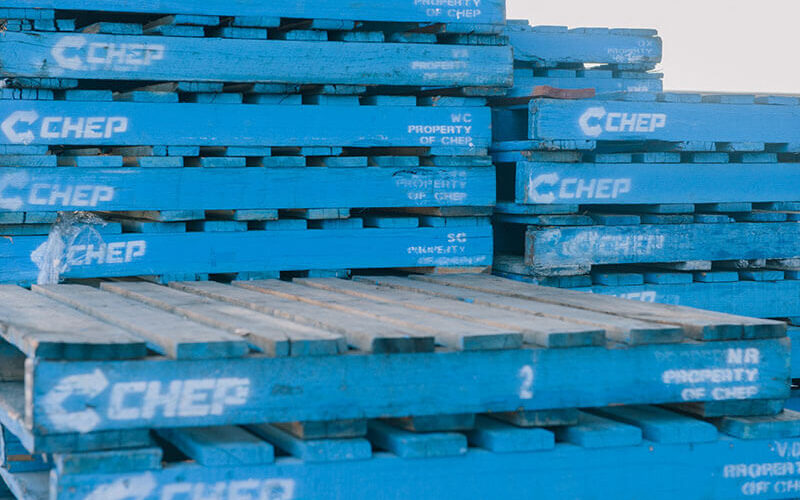
    CHEP is a company that offers pallet and container pooling services. Known for its blue pallets, CHEP pallets are designed for two- and four-way entry and are made of wooden blocks and boards. The blue color and logo make them easy to identify. CHEP pallets are durable and fit into existing supply chains, collected by CHEP’s service network.

    Why Buy CHEP Pallets?

    Well, you simply cannot buy CHEP Pallets but you can hire them for a small daily fee.  CHEP pallets are safe wooden pallets for product loading, distribution, and display. They are maintained throughout CHEP service centers, promoting effectiveness and resource use. CHEP’s business strategy is based on “share and reuse,” making them more sustainable. Companies prefer CHEP pallets due to their industry standards, reusable nature, and durable design.

    Summary

    Wooden pallets, specifically CHEP pallets, play a significant role in supply chain efficiency and sustainability. These cost-effective, durable, and environmentally friendly pallets are widely used across industries. CHEP pallets’ blue-painted design enhances safety and sustainability through their pooling system, making them ideal for businesses requiring strong, reusable storage.

    Best Pallets for Your Business

    Chep Pallets

    Pallets are flat structures that support mechanical equipment like forklifts and can sometimes be moved by pallet jacks, front-end loaders, and cranes.

    Pallets’ primary goal is to facilitate the smooth movement of items and prevent damage. Although their load handling capacity varies, most can withstand a significant size and weight. Therefore, pallets are essential in the logistics industry.

    Advantages of Pallets

    Pallets are environmentally friendly products that can be reused and disposable without violating environmental preservation principles. Some are made of wood, plastic, and metal.

    Pallets are configured differently in design; some are assembled in a reversible format, and the rest are designed in stackable structures. Both structures are advantageous for packing and storing products in high-rise and generic locations.

    Why Do They Vary in Configuration?

    Each pallet is configured according to its intended use or purpose. Some are designed to carry heavy loads, while others can be used for light tasks. Depending on the nature of your business, it is advisable to research and understand various facets of the product.

    Therefore, one must refer to the recommended guidelines before buying or hiring high-quality pallets. That includes CHEP pallets and Loscam pallets Australia. The following are ISO standard size pallet sizes that must be used as a guide;

    • 1200mm x 1000mm (North America)
    • 1000mm x 1100 mm (Aisa)
    • 1165mm x1165mm (Australia)
    • 800mm x 1200mm (Europe)

    What Are the Types of Pallets?

    Pallets present in various types and forms, each classified based on the material used to manufacture them. Like any other product, every kind of pallet has advantages and disadvantages. Pallets can also be configured in different sizes and shapes to align with work specifications.

    One of the categories draws its strength from the horizontal boards called stringers. They also have top and bottom decks that aid in weight bearing. The following is a description of the most widely used pallets;

    1. Injection-moulded pallets

    This category of pallets is injection-moulded in structure and comes in different colours and sizes. They weigh less than wooden pallets and are easy to stack on storage fixtures, particularly in warehouses.

    HDPE injection-moulded pallets last longer because they can withstand corrosion. They can also be recycled; the material is water resistant, so they can be cleaned using water. This type of pallet is commonly used in the food and pharmaceutical industry, considering expectations of high standards of hygiene and sanitation.

    1. Stringer Pallets

    Stringer pallets are recognised for providing more substantive support than block pallets. Given their design configuration, they provide additional reinforcement through the two boards between the top and bottom decks.

    They also have another support structure that runs through the centre of the structure.

    The pallet can only be lifted through the open sections based on the design and configuration. Those with a notch or four-way stringer pallets cut in the stringer, enabling the forklift to pick them easily. According to Australian standards, the CHEP pallets and Loscam pallets are most often classified as stringer pallets.

    1. Double-wing pallets

    Double-wing pallets are convenient because they can transport many products. The top and bottom decks extend beyond the stringers to facilitate additional surface area. These nonstandard-sized pallets

    sometimes cause transportation challenges, so it is important to verify with the supplier before acquiring the product.

    Roto Moulded Pallets

    Rotational moulding is the process applied when designing roto-moulded pallets. These pallets are affordable and available in different sizes. They can be modified to increase their load-bearing capacity by adding steel frames. Roto-moulded pallets are used in industries where hygiene is prioritised.

    1. Double-Face Pallets

    Double-face pallets are designed with both the top and bottom surfaces. The bottom deck increases strength and helps to distribute the weight evenly across the load. Considering that they have the top and bottom decks, they can be used on either side. Double-face pallets are commonly used in heavy-duty industries.

          2. Solid Deck Pallets

    A solid deck pallet consists of a single, continuous sheet of plastic, wood, or metallic material without a gap between them. The design provides a flat surface for the load.

    Solid deck pallets prevent items from slipping through the gaps, giving them outright support for the load. They are suitable for moving small items that would otherwise slip through gaps if transported through other versions of pallets.

    How Do You Choose the Best Pallet for Your Company?

    Pallets are essential for storing and transporting items. The type, size, and loading capacity of the pallets required for your business’s operations will depend on your business’s nature.

    Plastic pallets, such as those from CHEP Australia and Loscam Pallets Australia, can be recycled. They also have a longer life span than wooden pallets. Based on these qualities, plastic pallets are the most widely used type of pallet.

    What Are the Key Factors to Consider When Choosing Pallets?

    1. Dimensions of packaging:

    The dimensions of your packaging, such as the height, width, and quality of items, determine the selection of a pallet.

    1. Shipping Destination

    Your pallet selection must be consistent with the ISPM 15 regulations, especially for companies intending to transport items offshore or overseas. Given the volume of international trade in Australia, pallets like Chep and

    Loscam Pallets have gained popularity. However, verifying the pallet

    relocation costs is essential before choosing one that suits your situation.

    Budget

    Minimising transportation and delivery costs is expected in the packaging industry. Your budget plays a critical role in your choice of pallet. Research has shown that hiring pallets is more cost-effective than acquiring them as part of capital expenditure.

    1. Product Type

    Your product is the key factor determining the pallet type to be used. The weight of the commodity, given the variations in their weight-bearing capacity, affects your choice of pallet. Depending on the product that

    needs transportation, you can choose between wood, plastic, or metal pallets. For example, Loscam Plastic Pallets are ideal for food and beverages. In fact, options such as crates and beverage trays are available at CHEP and Loscam Pallets.

    2. Frequency of use

    If your shipping frequency is low, it is advisable to use reconditioned or second hand pallets. However if your frequency of use is high, it is important to choose materials with high readability thresholds.

    3. Conditions of transportation

    Different conditions determine the choice of a suitable pallet. These include temperature, storage conditions, and duration of transit. Pallets made of wood or paper are affected by moist conditions; hence, they are unsuitable for moist or wet conditions.

    Summary

    Therefore, it is important to consider the following factors when choosing a pallet type:

    • Product type
    • Frequency of use
    • Budget (Financial Status)
    • Shipping Destination
    • Packaging Dimensions
    • Transportation Conditions

    Every type of pallet like wood, plastic or metal presents with unique specific advantages. That makes it imperative to assess the underlying factors buying or hiring pallets from suppliers like CHEP Australia or Loscam Australia for use in your business.

    Pallet Management Services

    Pallet Management

    Pallets are essential for cargo protection, bulk shipment, and damage reduction. They are also convenient for inventory management because they promote stock organisation. Pallets are a crucial feature of modern supply chain systems.

    Pallet services include managing companies that rely on inventory. Through pallet management services, businesses can streamline operations and improve communication systems.

    It is essential to consider these factors for pallet management: 

    Establishment of a Detailed Pallet Policy

    It is important to formulate a viable pallet policy and adequately communicate it to your customers and suppliers. All parties must

    understand the terms and conditions governing the pallet policy, which will minimise misconceptions and disputes related to the handling of pallets.

    Your pallet policy must be aligned with those of your counterparts in the same industry to safeguard accountability and integrity. The policy must underscore fair trade rules and regulations to avoid disputes or legislative arguments that may disrupt your operations. In addition to the setbacks, unconstitutional policies will affect your networks and partnerships.

    Use of Web-Based Software.

    Pallets rely on a system similar to a copy paper-based system, but that doesn’t mean you can’t use technology. Web-based software systems

    reduce human input and minimise the incidence of errors, which enhances the effectiveness of your systems when generating up-to-date reports. The major limitation to your success will be your return on investment,

    something that the skills and services of a pallet management provider.

    Understand Your Supplier’s Invoice

    The invoice delivered by your supplier is an essential document given that it summarises your transactions. When you understand the invoices, your payments will also be accurate, with no possibility of overpaying your

    supplier. When you understand the invoice, it is possible to identify

    different aspects of the invoice, such as the on-hire balance and invoice

    cost and identify irregularities. It is also possible to detect inconsistent patterns and overpriced equipment. In the event of an overpriced equipment, the error can be rectified as long as it is detected on time.

    Creation of Monthly KPI Reports

    Pallet account trend monitoring is a crucial component of the Pallet Management Procedure. Companies need to understand the issues of account variance, flowthrough ratio (FTR) and the exception rate. All these factors are relevant to your cost control initiatives.

    A negative variance indicates an overpayment. FTR signifies a variance shift and a high exception rate affects the accuracy of your reporting. The scenario will indicate the need for staff training and process improvement. Understanding the above concepts is important to achieving a viable pallet management process.

    Select Your Pallet Controller Carefully.

    Having a competent pallet controller is an integral step in the right

    direction. A pallet controller’s responsibility is to reduce costs and ensure that the company operates from a profitable position by minimising losses.

    One of the key qualities of a pallet controller is to understand the commercial impact of pallets in the supply chain system. He must be an effective communicator with excellent interpersonal skills.

    Depending on the company policy, some businesses prefer to have an

    inhouse controller and others outsource third party controllers to capitalise on the expertise.

    Whatever option the business may choose to operate on, the move will

    help in terms of eliminating unnecessary costs emanating from poor pallet control services. Therefore, a competent pallet controller will guarantee a smooth supply chain system and efficient operations.

    Pallet Pooling

    Pallet pooling is a circular economy concept in which companies share pallets. The strategy reduces the complications of procurement, management, and recovery processes. Instead of buying pallets, some

    companies rent them and outsource the management part of the process. Pooled pallets reduce waste and lower the Total Cost of Business (TCOB)

    because they eliminate the responsibilities of managing a company’s pallet supply.

    Auditing Your Processes

    Auditing is an investigative process that is designed to identify potential pallet losses and how the errors were committed. The process helps the business to identify irregularities which can be the weaknesses in staff performance and business processes.

    Based on the audit’s findings, the business can implement corrective measures such as staff training, process improvement, and compliance reporting.

    Weekly Reconciliation of Your Invoices

    Your pallet account, like a bank account, deserves reconciliation to safeguard the accuracy of your transactions. It is also essential to verify the expected transfers and identify the unexpected ones for further investigation.

    Invoice reconciliation may be as simple as correcting dates, quantities, and types of equipment and rejecting transfers. The recommendation is that

    the company opt for the weekly invoice package instead of the monthly option.

    It is easier to manage an error within the week it was committed than rectify the mistake after a month. Therefore, reconciliation is vital in maintaining efficient operating systems.

    Addressing Issues from Their Root System

    Set deadlines for your weekly and monthly workflows to recover lost pallets and address the matter as soon as it is identified. When a pallet movement is fresh in the minds of those who handled it and documentation is available, the process of recovering your pallets becomes much easier. Using your documentation to recover lost pallets is not an effective strategy, especially if the documentation is incomplete.

    Backdated records of pallet rental are not the best way to trace and recover lost pallets. The strategy’s outcome will improve the process and reduce recurrence, hence managing future risks.

    Summary

    Proactive management practices in pallet control are crucial for maximising the effectiveness of pallet management and minimising expenses. These include:


        • Clearly Defined Policies

        • Automation Technology

        • Understanding Supplier Invoices

        • Monitoring KPIs

        • Selection of Competent Controllers,

        • Sustainability Considerations

        • Routine Audits,

        • Timely Invoice Reconciliation

      If you are searching for the best pallet solutions in Australia, contact Precise Pallet Management today. PPM provides expert services to maximise pallet recoveries and minimise losses, saving time, effort and resources.